David Krut Arts is pleased to present HOPE / Against the Grammar of Violence, the first solo exhibition by Diego Masera at David Krut Arts, Johannesburg. The exhibition brings together conceptual works on paper and a video work, alongside a new series of unique works produced in collaboration with the David Krut Workshop.
Masera is a former diplomat and cultural interlocutor whose work explores international exchange, social dialogue, and contemporary cultural production. Drawing on his background in international development, environmental policy, and work with communities affected by inequality and climate crisis, Masera approaches art as a form of knowledge capable of expressing what political and institutional language often cannot.
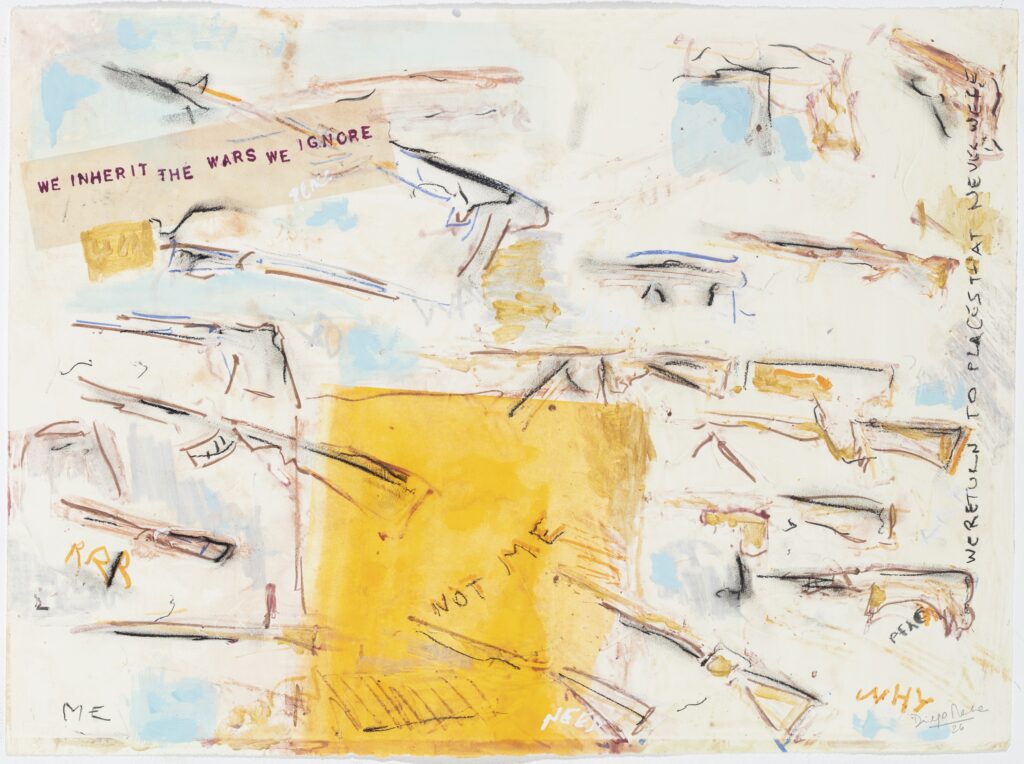
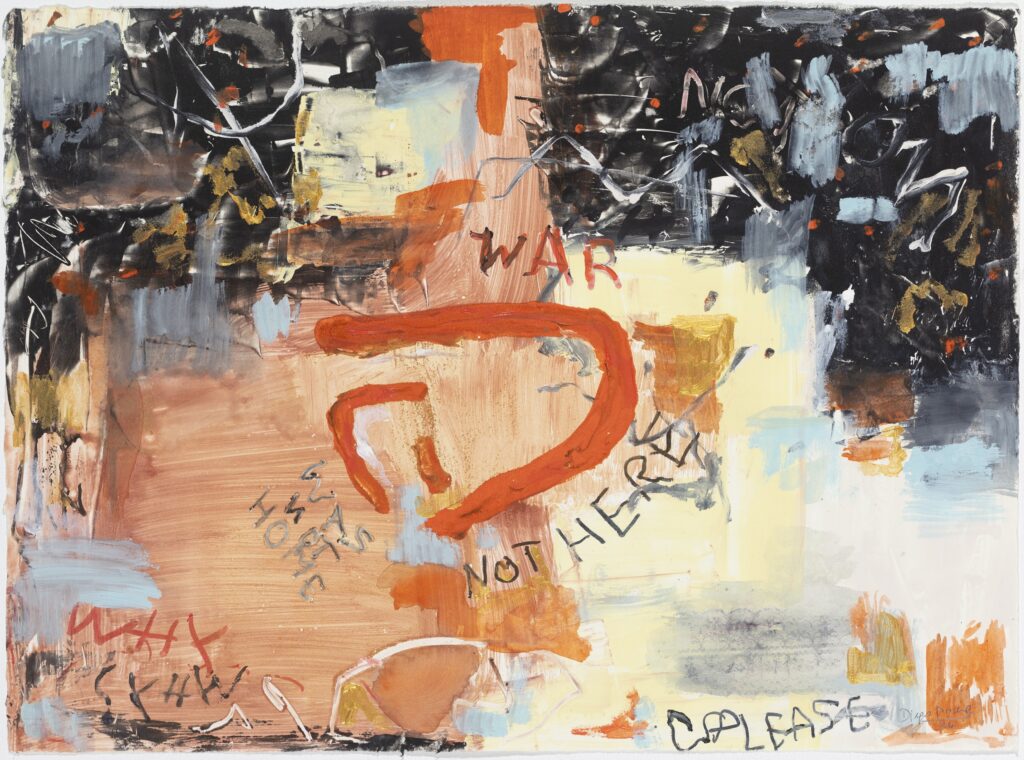
We inherit the wars we ignore I, 2026
Watercolour monotype with chine collé and Stabilo Woody pencils
38 x 56 cm
R 10 800.00 VAT Incl. Framed
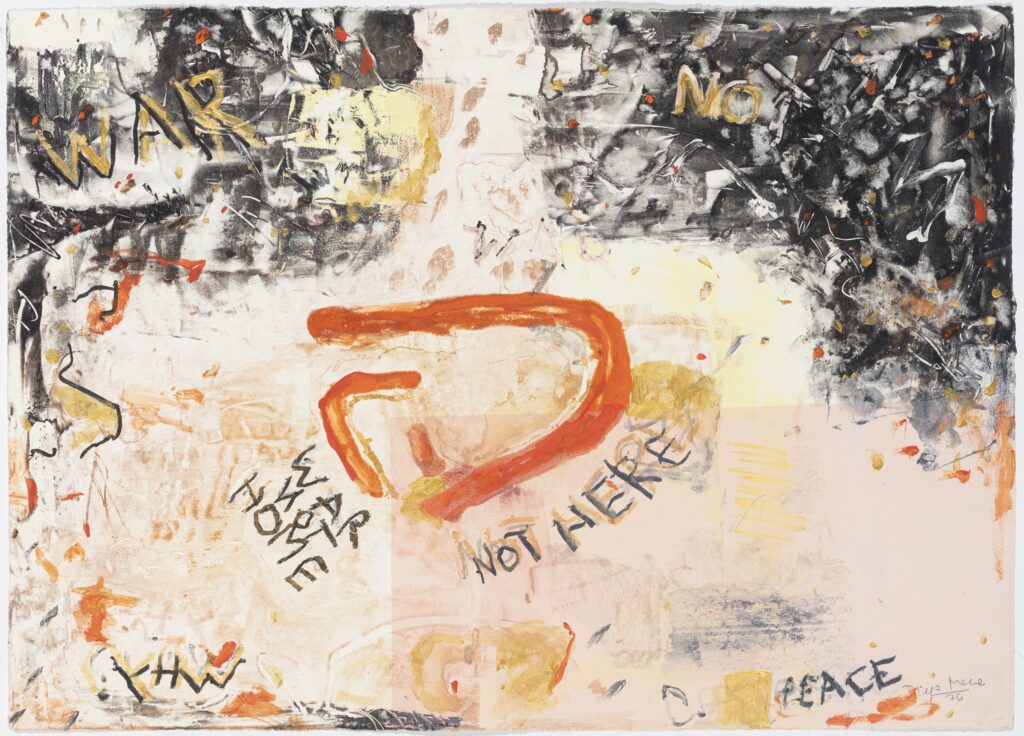
We inherit the wars we ignore II, 2026
Watercolour monotype with chine collé and Stabilo Woody pencils
38 x 56 cm
R 10 800.00 VAT Incl. Framed
What we refuse to remember returns in other forms: this work reminds us that peace depends on memory, and that those who come after us will carry the burden of today’s conflicts.
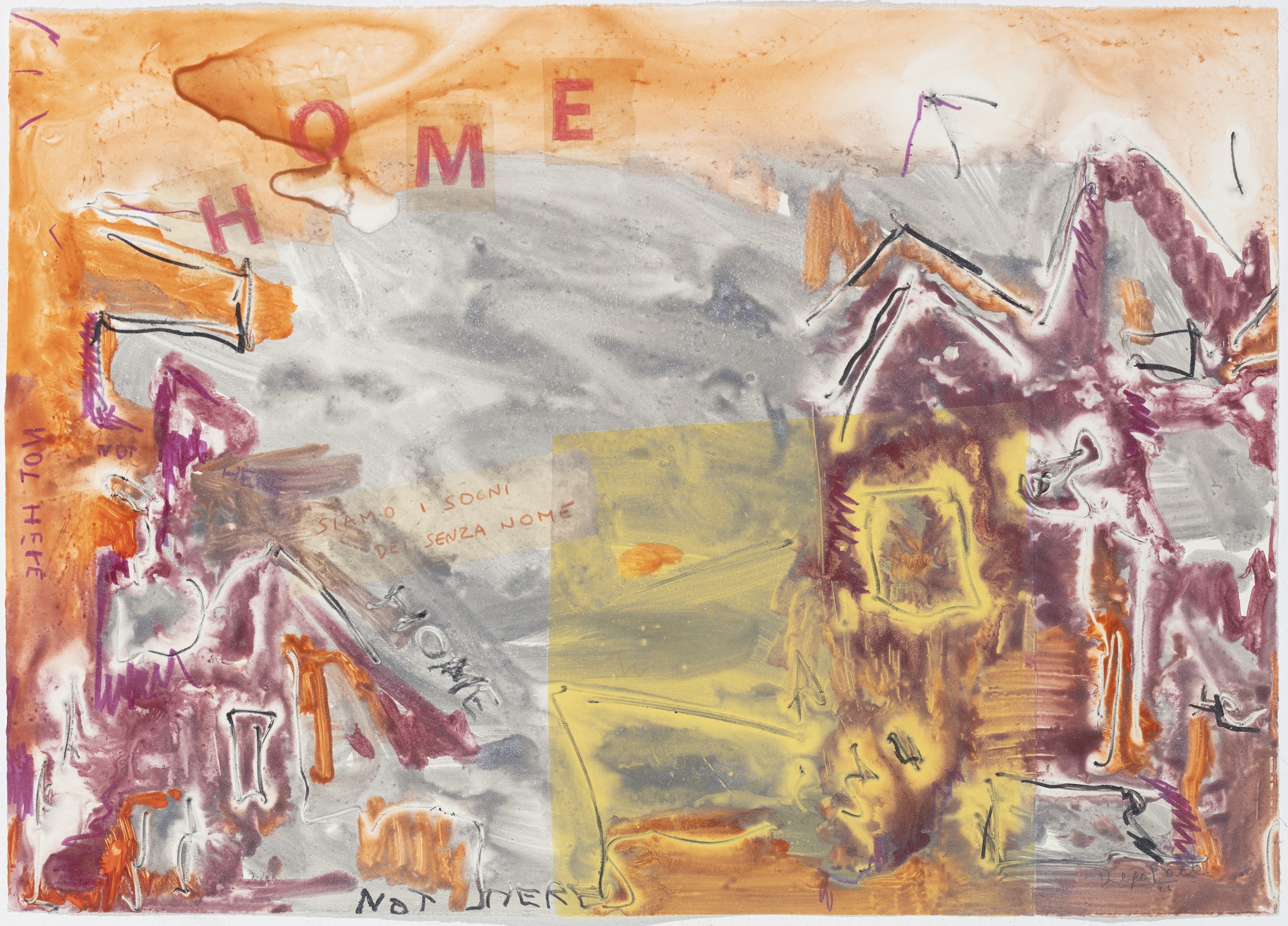
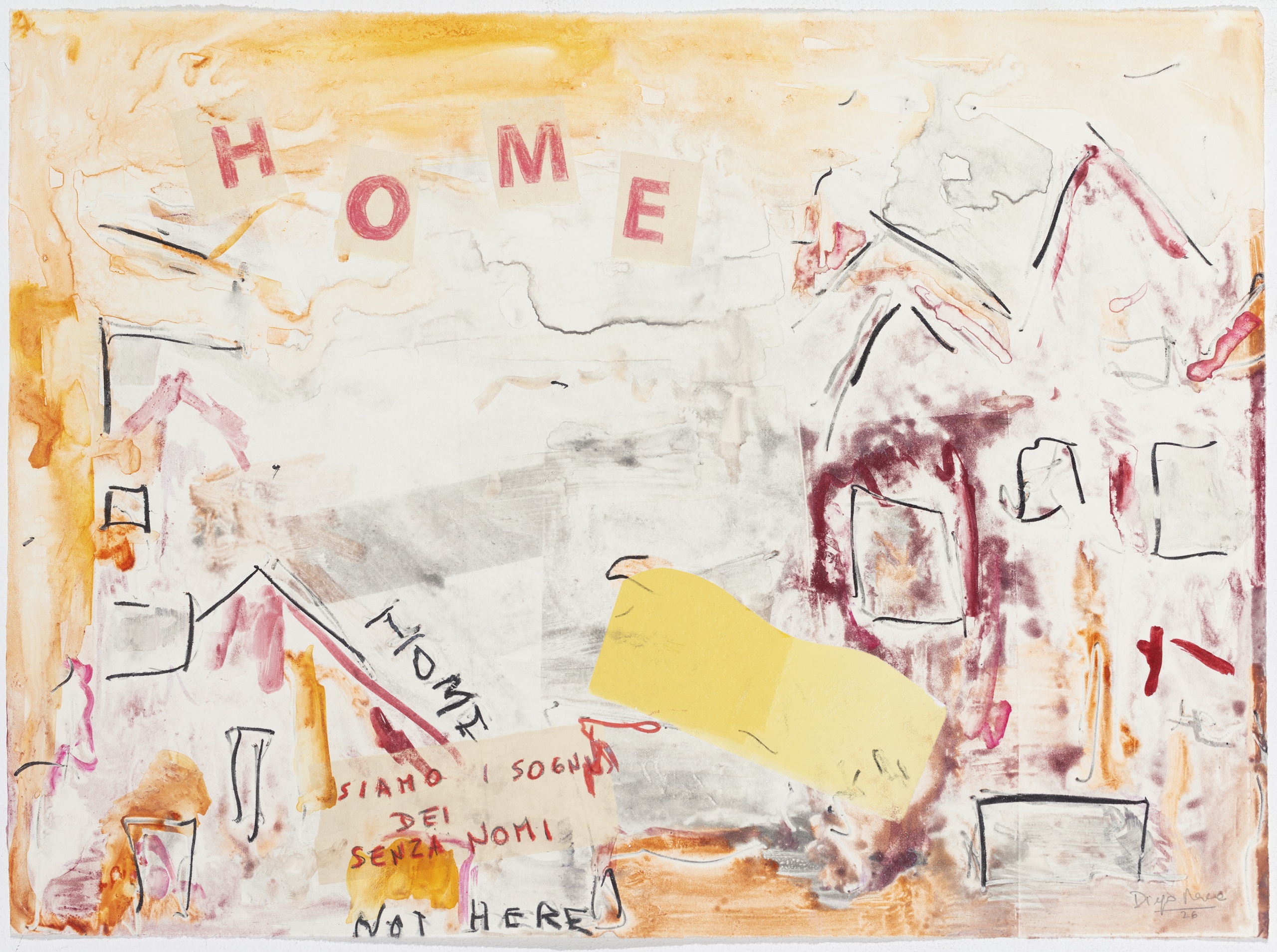
Home, 2026
Watercolour monotype with chine collé and Stabilo Woody pencils
38 x 56 cm
R 10 800.00 VAT Incl. Framed
We are the dreams of unknown people.
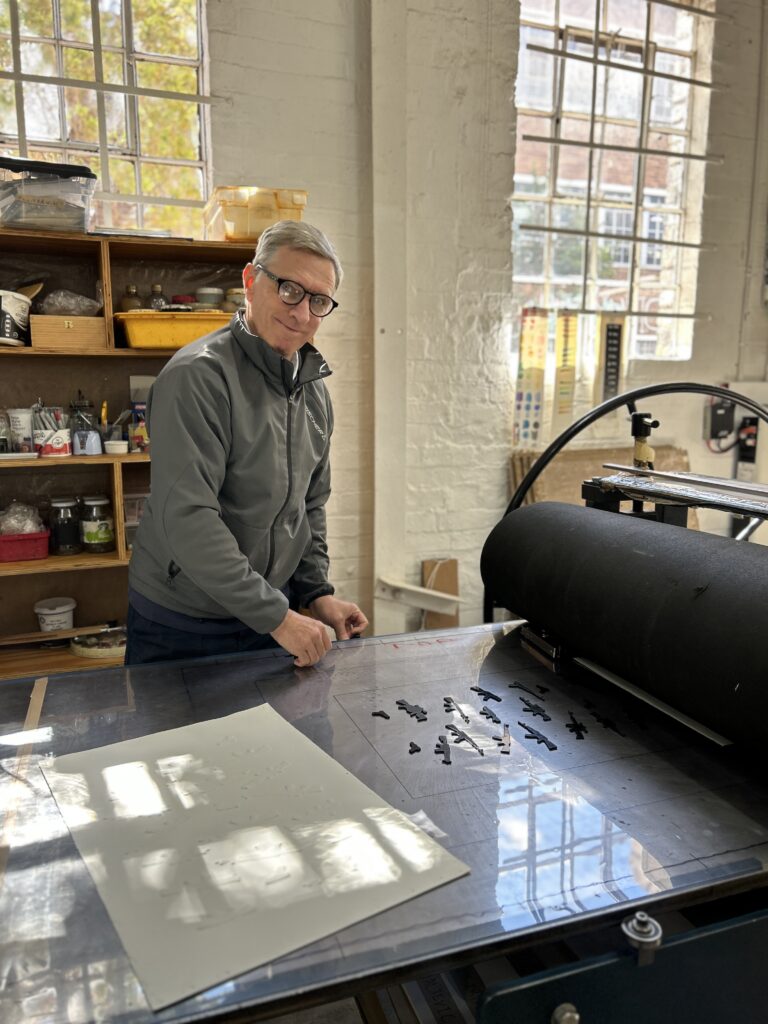
Created at a time marked by war, displacement, political fragmentation and the erosion of meaningful international dialogue, the exhibition considers hope not as sentiment, but as an ethical necessity. Expanding these concerns into visual form, Masera collaborated with Roxy Kaczmarek at the David Krut Workshop in downtown Arts On Main, Johannesburg to produce his first experimental body of work on paper exploring peace, borders, migration and the hidden structures that sustain global conflict. Through these works as well as through video, and pieces informed by performance and statistical data, Masera reflects on the fragile and often contradictory relationship between violence and peace.
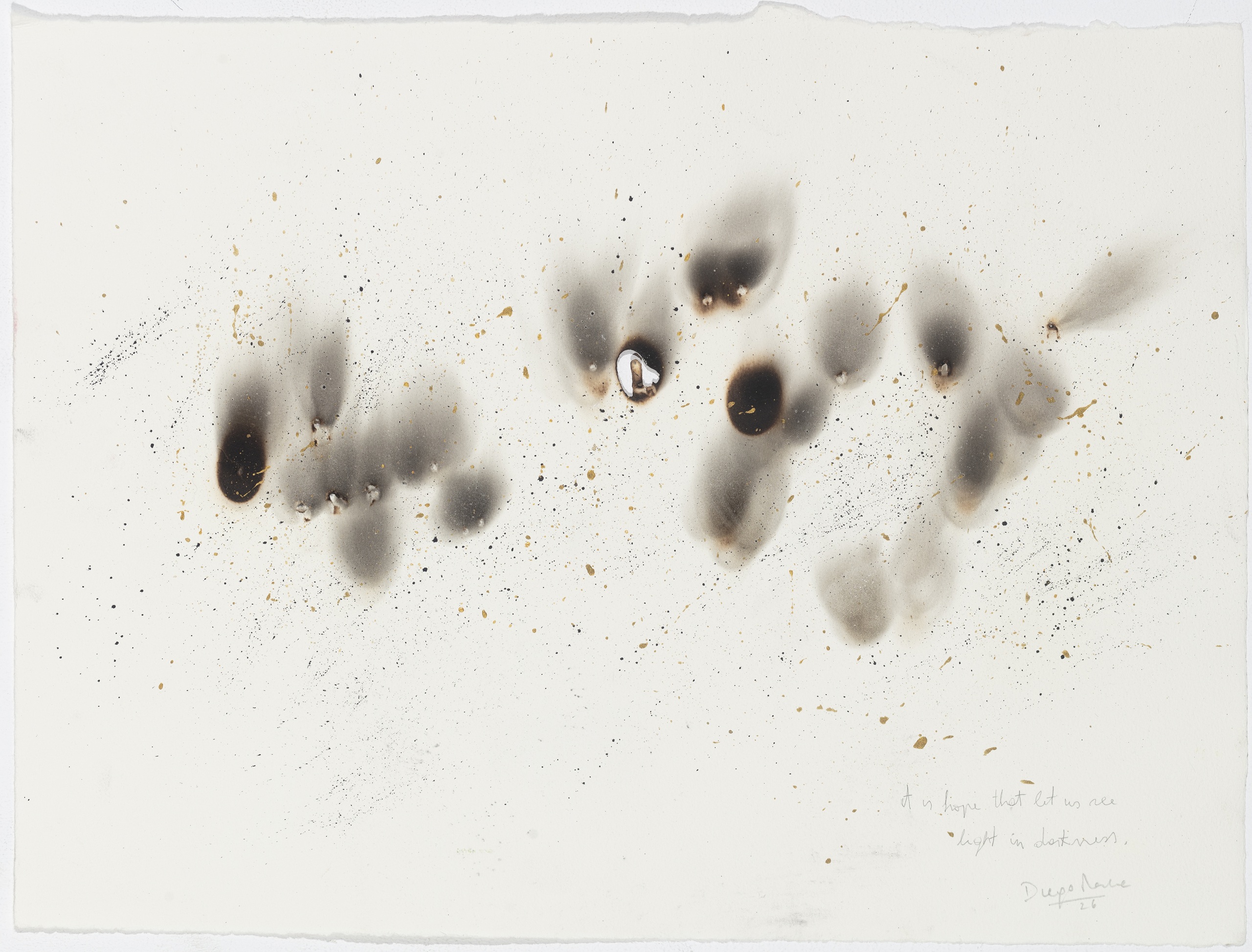
It is hope that allows us to live, 2026
Smoke on paper
38 x 56 cm
R 10 800.00 VAT Incl. Framed
The work shows marks made by flame, representing the presence of nuclear capabilities around the globe, exploring the duality of a fragile world ruled by fear but – at the same time – the stubborn force of hope. The work is inspired by Desmond Tutu’s belief in hope as a moral force — the light that allows us to continue living, even under the shadow of destruction.
Exit wounds, 2026
Bullet holes through paper
38 x 56 cm
R 20 000.00 VAT Incl. Framed with Video Work
The word “PEACE” is pierced into the paper in reverse by bullets. The narrative turns violence into a wounded language, reminding us that peace cannot come from the same force that destroys it.
Central to the exhibition is a large-scale paperwork in which the word PEACE is formed through bullet holes. Readable only in reverse, the work suggests peace as something violently forced into visibility — seen only through evidence of destruction. Accompanied by a video documenting its making, the piece confronts the paradox of imagining peace through instruments of violence. The bullet becomes both mark and wound; the paper both target and witness.
Siamo i sogni deo senza nome, 2026
Watercolour monotype with chine collé and Stabilo Woody pencils
38 x 56 cm
R 10 800.00 VAT Incl. Framed
Some stories need to be told I, 2026
Watercolour monotype with chine collé and Stabilo Woody pencils
38 x 56 cm
R 10 800.00 VAT Incl. Framed
Some stories need to be told II, 2026
Watercolour monotype with chine collé and Stabilo Woody pencils
38 x 56 cm
R 10 800.00 VAT Incl. Framed
A reminder that, behind every armed conflict there are countless personal stories of suffering, loss and silence. These stories are seldom heard, seldom written and seldom given the reflection they deserve.
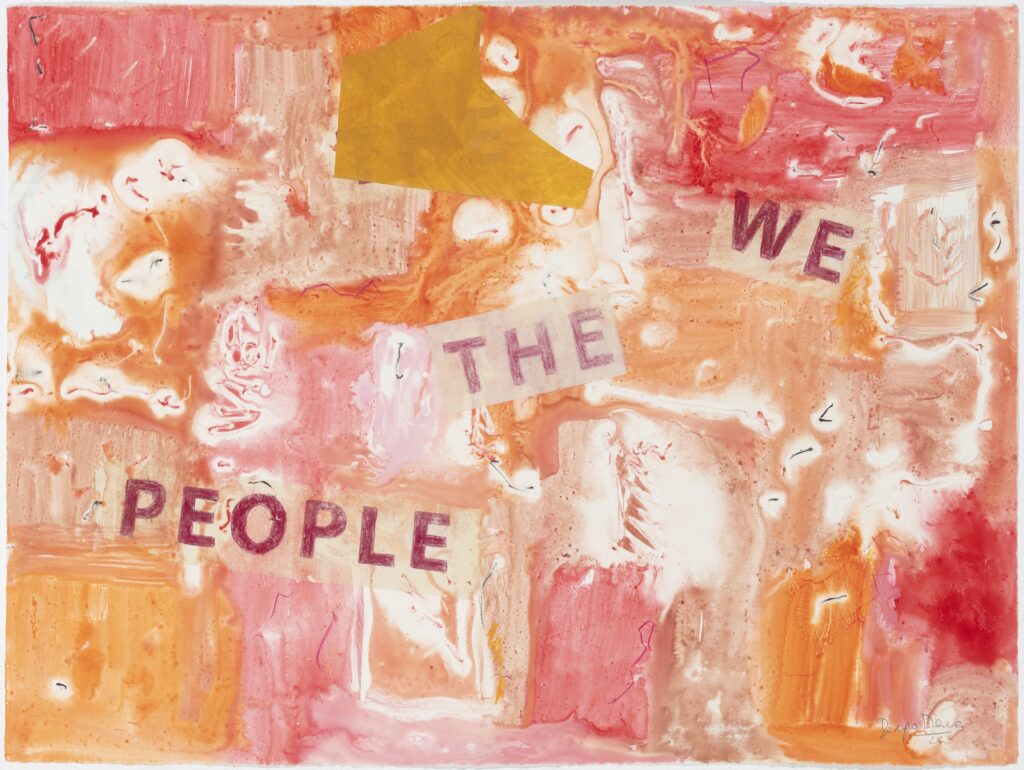
We the people I, 2026
Watercolour monotype with chine collé and Stabilo Woody pencils
38 x 56 cm
R 10 800.00 VAT Incl. Framed
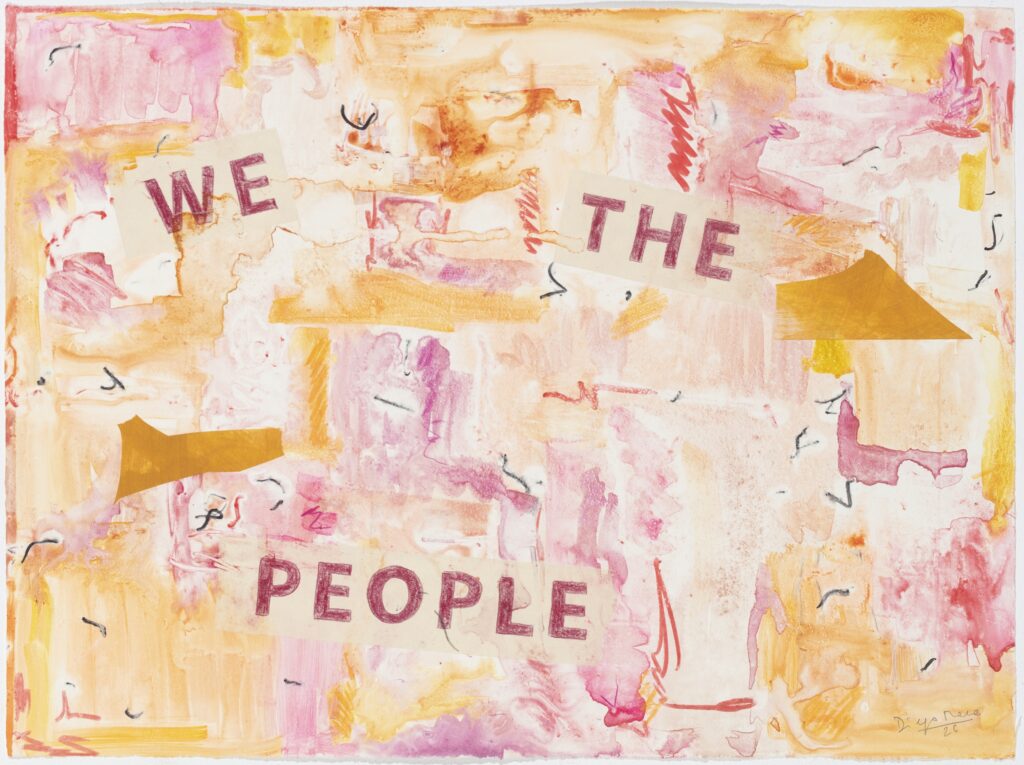
We the people I, 2026
Watercolour monotype with chine collé and Stabilo Woody pencils
38 x 56 cm
R 10 800.00 VAT Incl. Framed
“We the people.” The opening sentence of the United Nations Charter codifies the core principles of international relations and obligates member States to settle disputes peacefully, prohibiting unilateral threat or use of force.
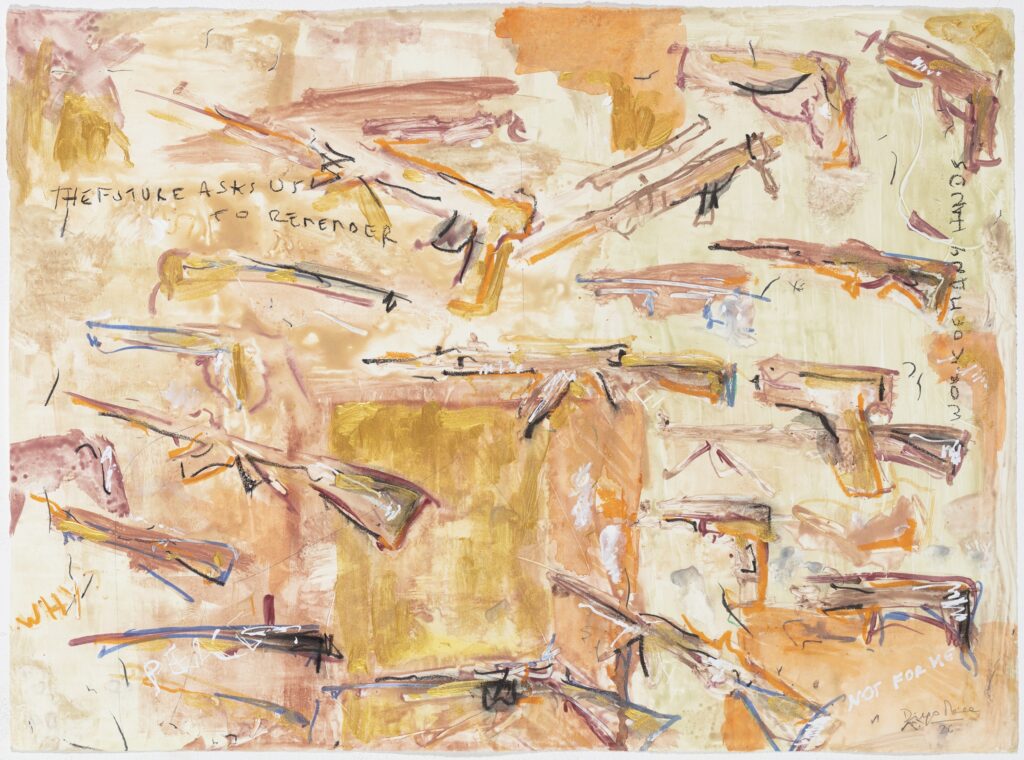
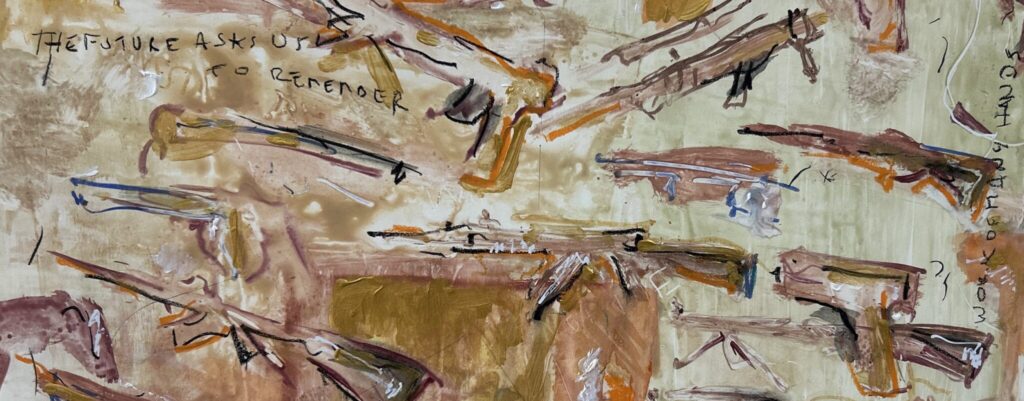
The future asks us to remember, 2026
Watercolour monotype with chine collé and Stabilo Woody pencils
38 x 56 cm
R 10 800.00 VAT Incl. Framed
Wars end before its effects end in people’s lives. This work reminds us that forgetting is also a form of loss, and that the future depends on what and how we choose to remember.
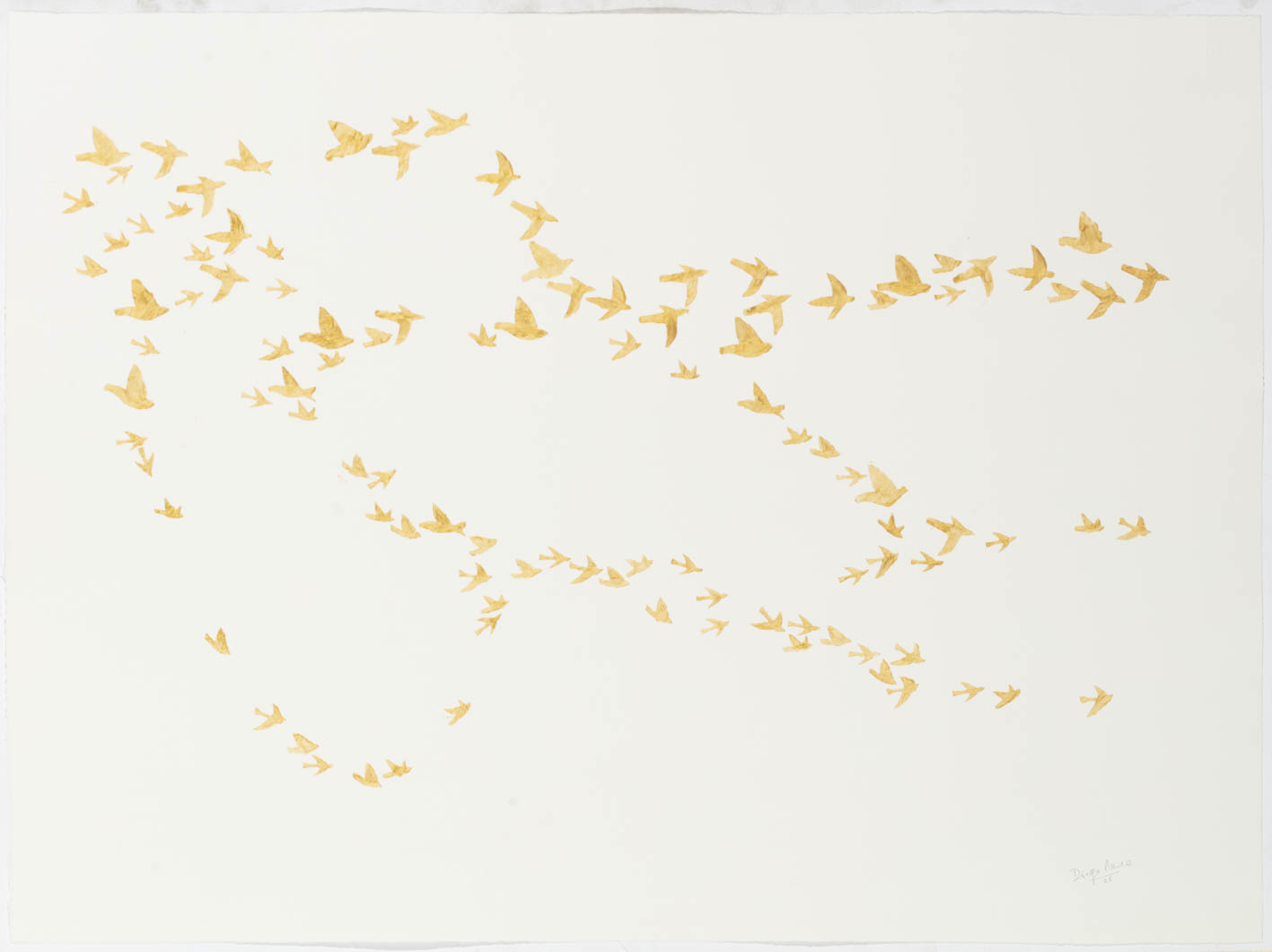
Images of bird migration evoke disrupted movement and contested airspace during times of war, while mapped routes of migration and weapons circulation point to the wider systems shaping human displacement and instability. Together, the works reflect on rupture, vulnerability, and the possibility of repair.
Migration Path, 2026
Acrylic on paper
76 x 107 cm
R 9 500.00 VAT Incl. Unframed
What looks like birds’ migration patterns are in fact the diverted flight paths of airplanes during the Iran war in March 2026. Transforming ‘routes of fear’ into fragile bird wings reminds us how conflict interrupts even the invisible movements of the heavens.
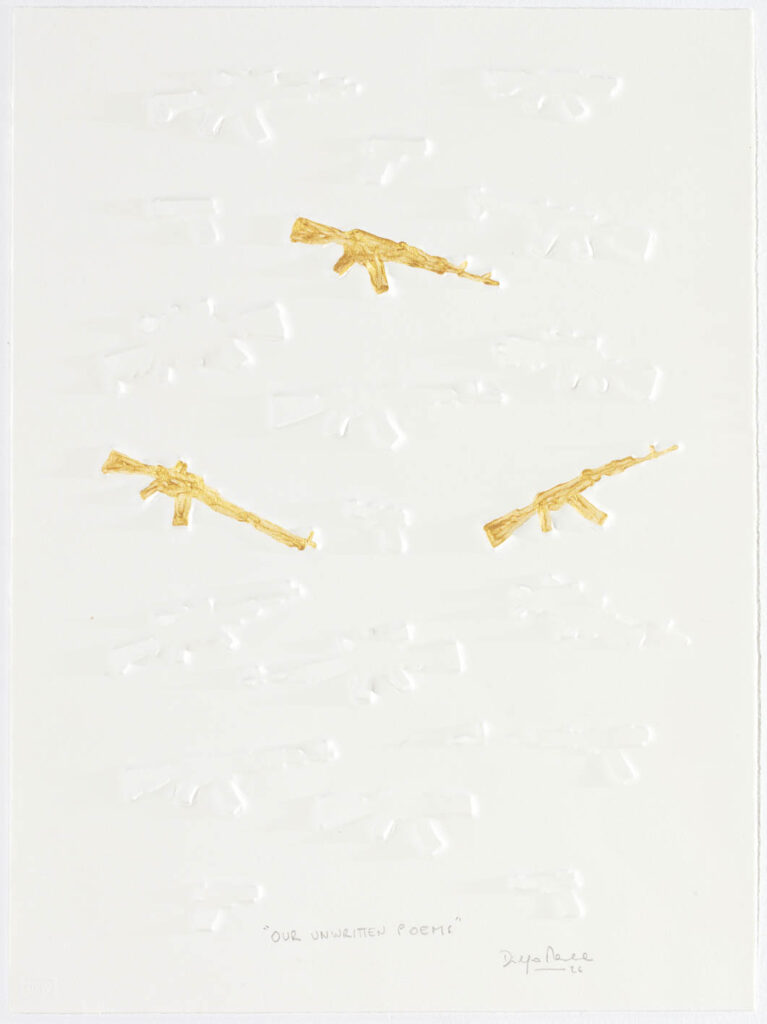
Our unwritten poems, 2026
Embossing with acrylic hand-painting
50.1 x 37.1 cm
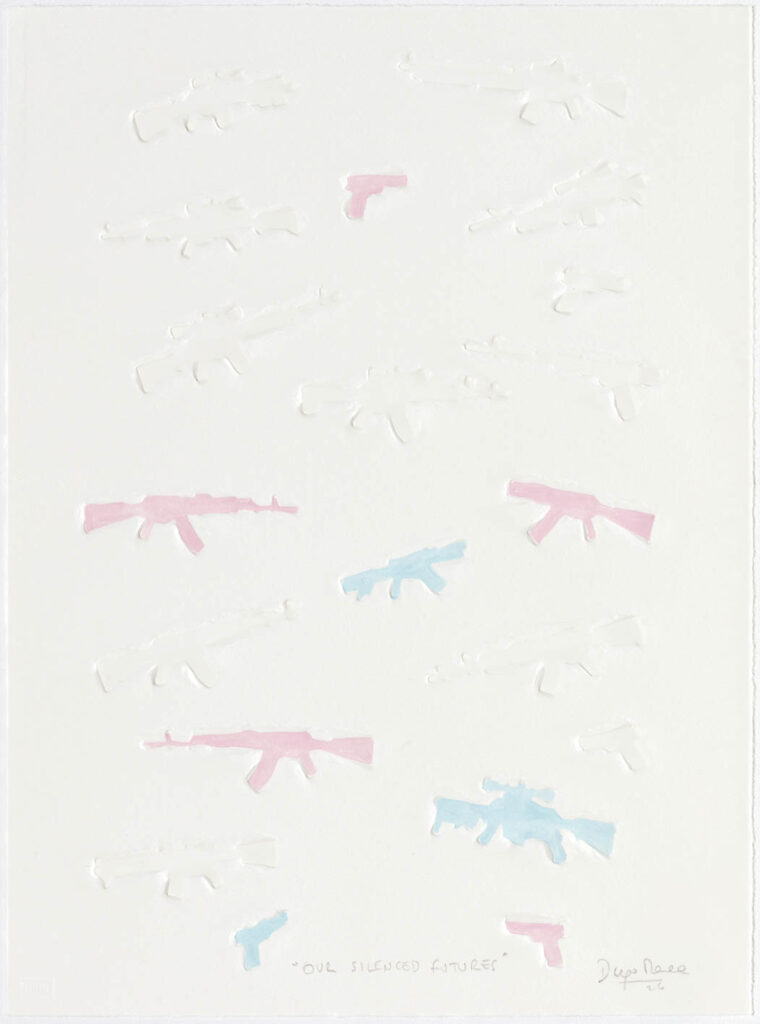
Our silenced futures, 2026
Embossing with acrylic hand-painting
50.1 x 37.1 cm
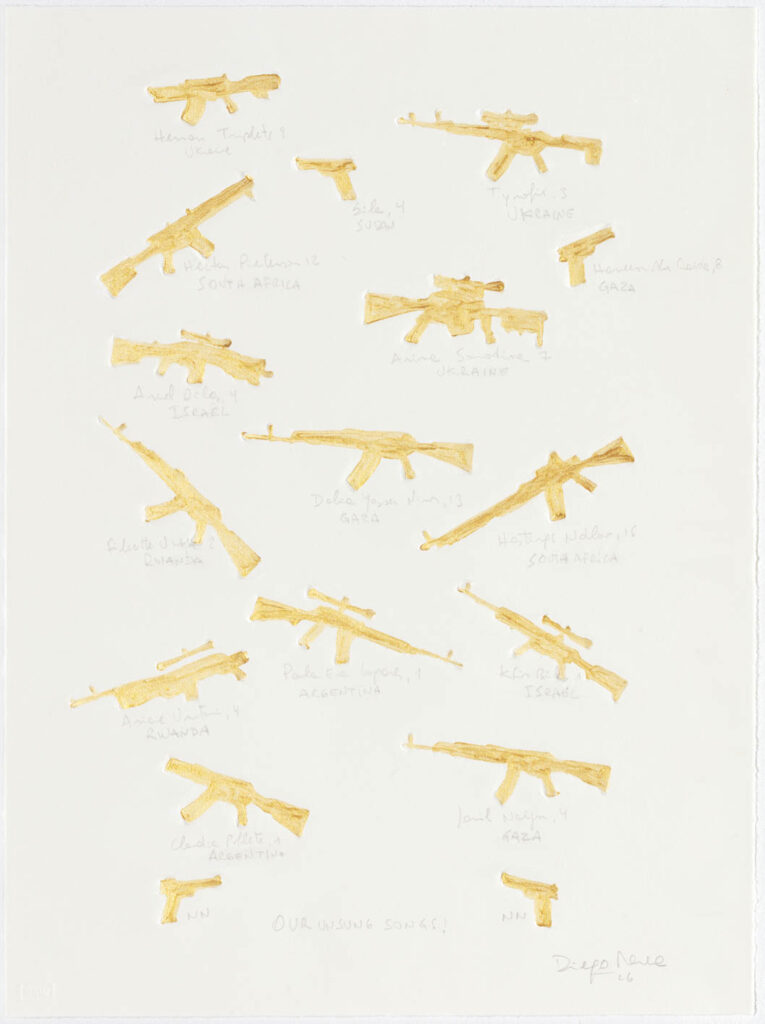
Our unsung songs, 2026
Embossing with acrylic hand-painting
50.1 x 37.1 cm
R 12 000.00 VAT Incl. Unframed
Sold as a set of three
Featuring the names of innocent children killed in global conflicts, each name represents a song that was never sung. A future interrupted and a stark reminder of the silent price of war.
Masera’s broader practice engages themes of home, exile, memory, and belonging, drawing from personal experience. These ideas expand toward peace itself as a condition for survival and belonging. Rather than offering optimism, the exhibition proposes hope as an active and necessary responsibility. In a moment of global uncertainty, Masera positions art as a space for reflection, resistance, and the possibility of imagining otherwise.
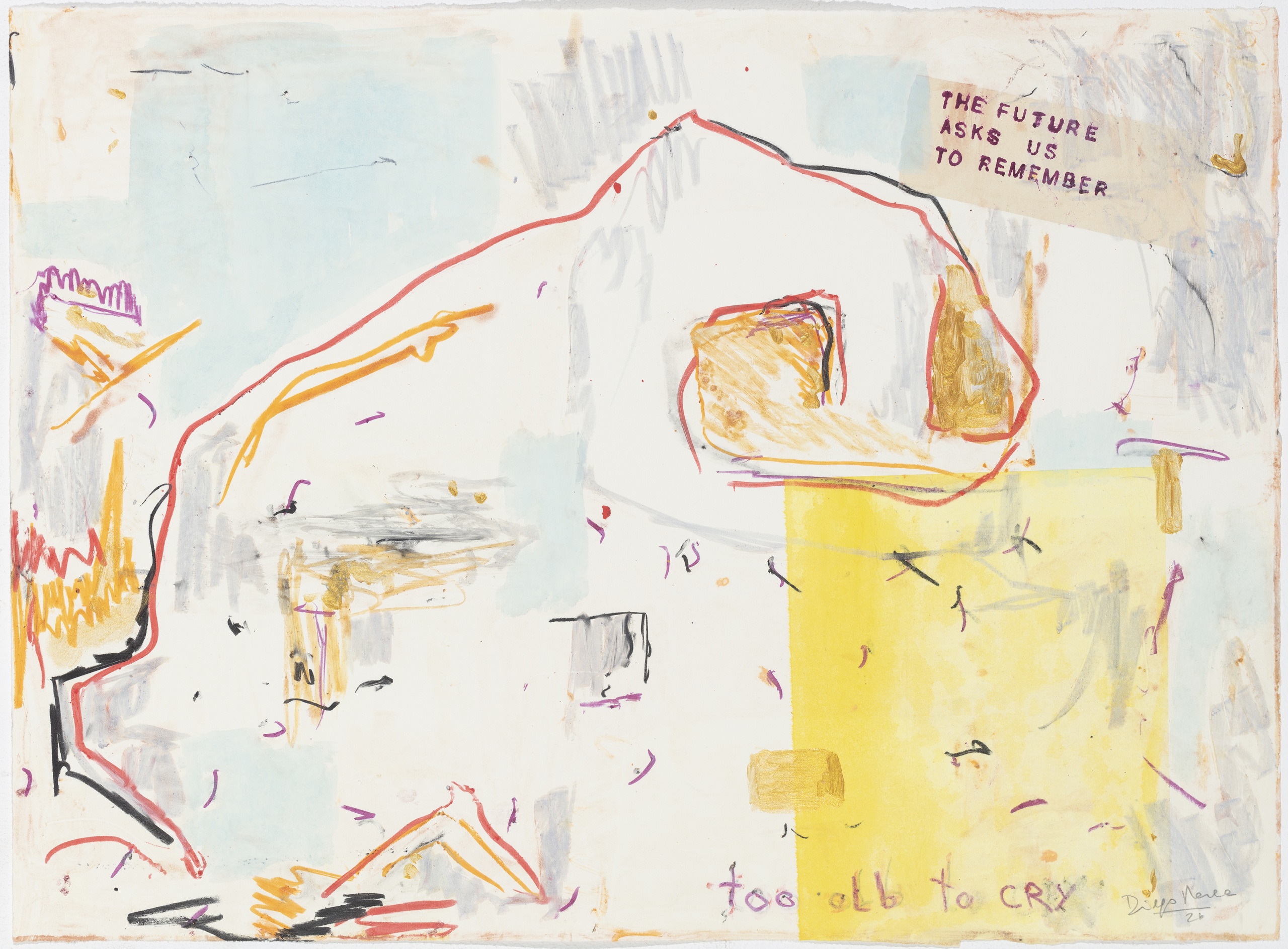
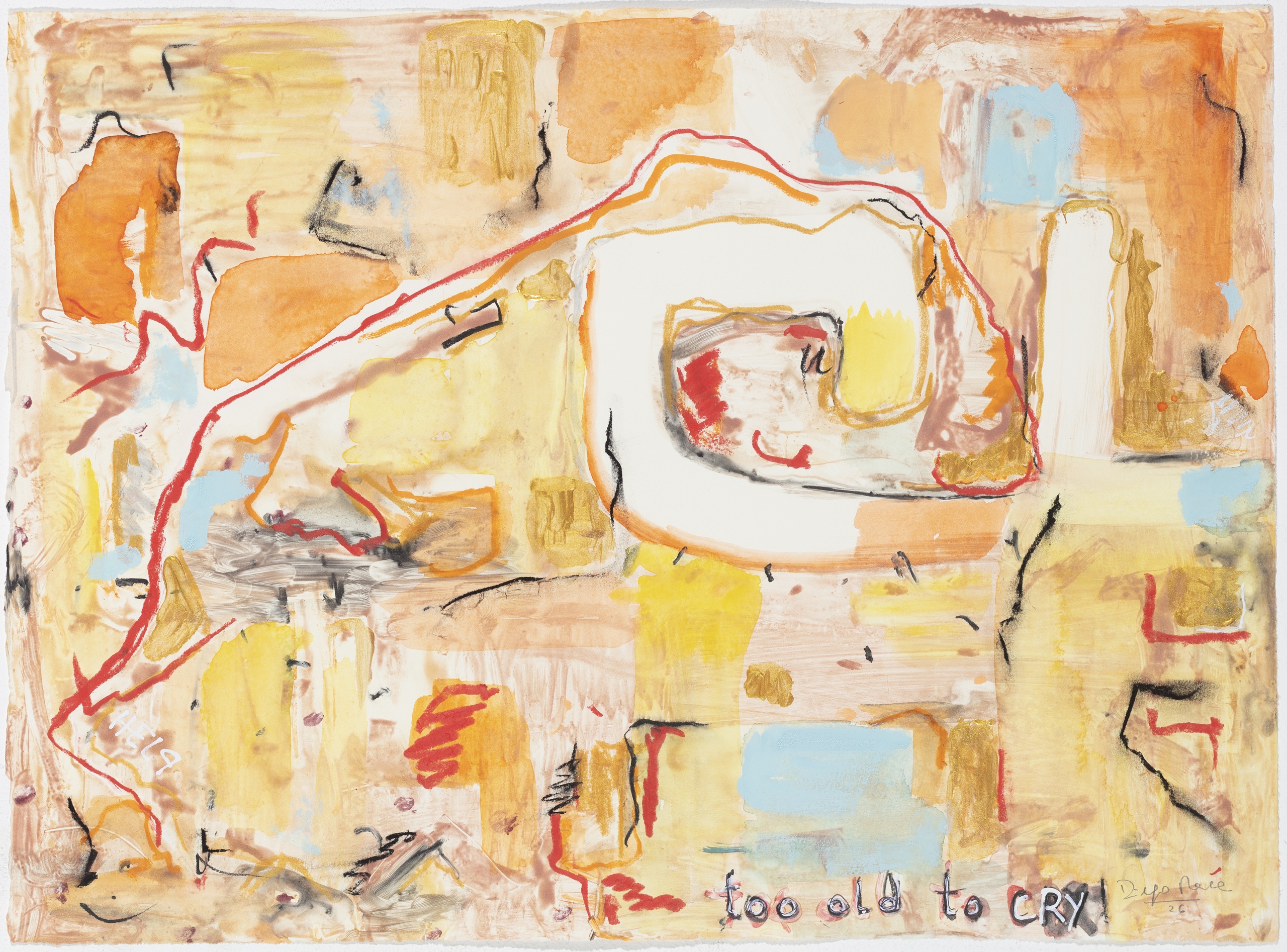
Too old to cry, 2026
Watercolour monotype with chine collé and Stabilo Woody pencils
38 x 56 cm
R 10 800.00 VAT Incl. Framed
Exploring the stark reality of parents outliving their children as causalities of senseless wars. Their grief is quiet, but endless — grief beyond tears, beyond words, beyond time.
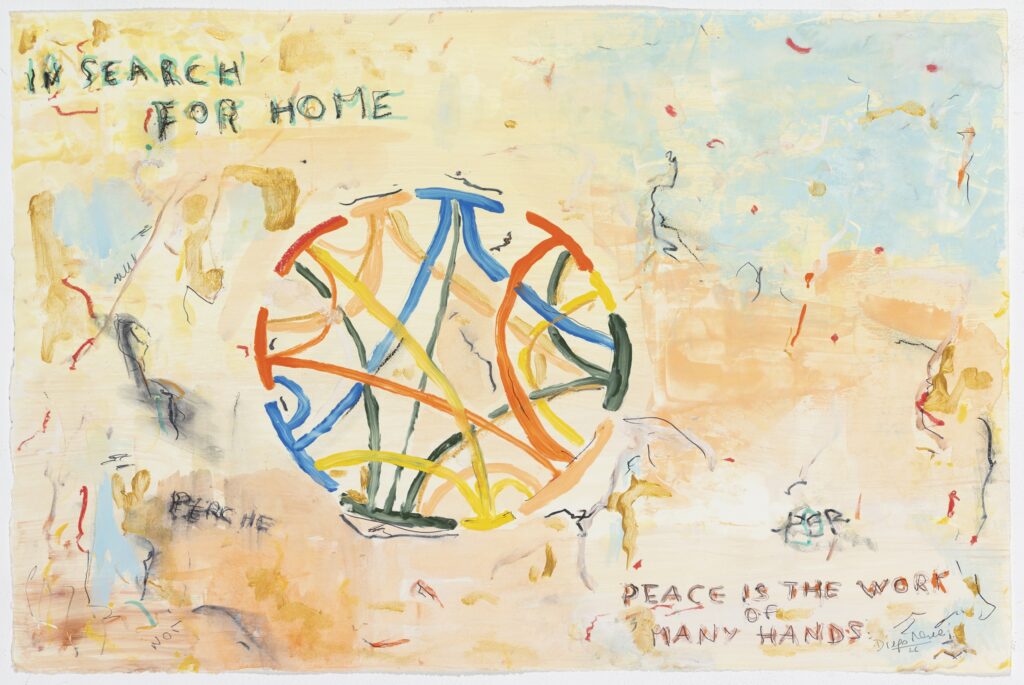
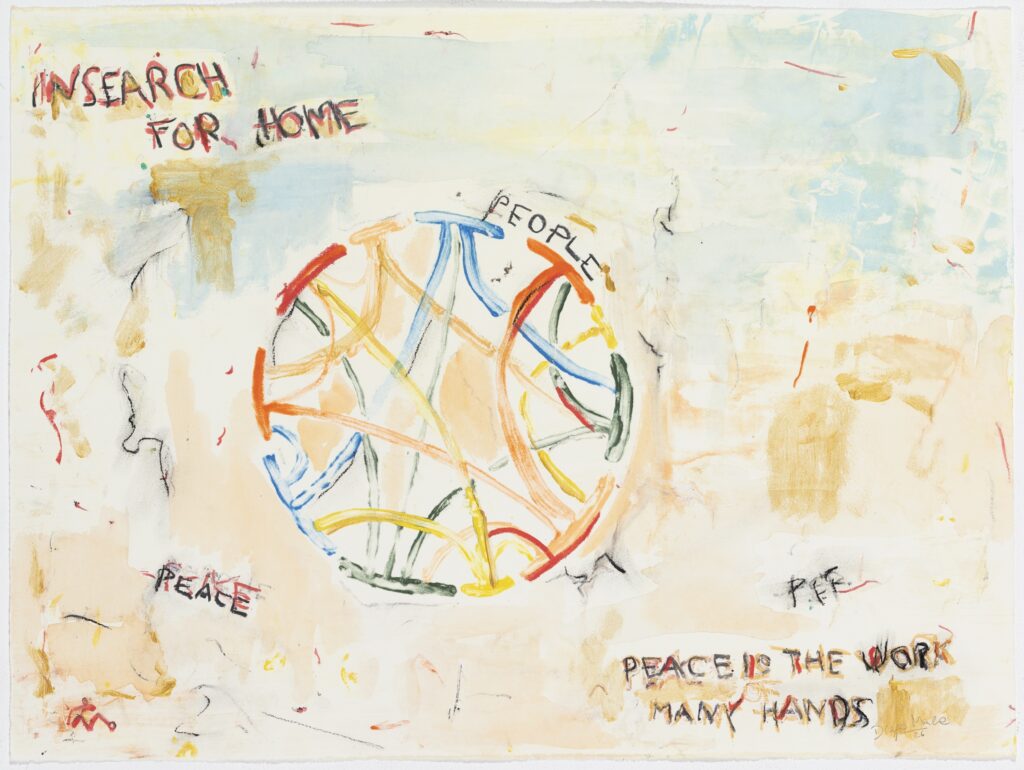
Peace is the work of many hands, 2026
Watercolour monotype with Stabilo Woody pencils
38 x 56 cm
R 10 800.00 VAT Incl. Framed
In search for home, 2026
Watercolour monotype with Stabilo Woody pencils
38 x 56 cm
R 10 800.00 VAT Incl. Framed
The work is an interpretation of a 2025 graph showing the flow of migrants around in 2025. There are approximately 304 million migrants worldwide.
HOPE/Against the Grammar of Violence offers a timely reflection on the urgent need to reclaim the language of peace before it disappears from public imagination.
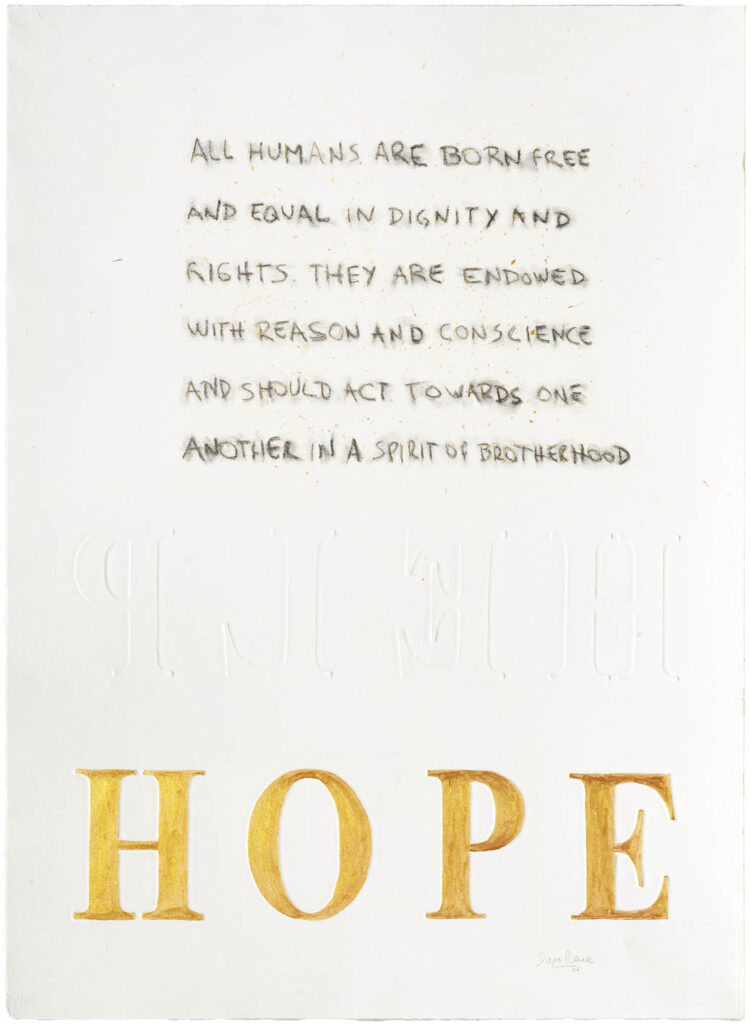
HOPE, 2026
Embossing with handwork in acrylic and charcoal
102.7 x 74.5 cm
SOLD
This work recalls the opening words of the Universal Declaration of Human Rights as one of man’s noble acts of hope. Read after global acts violence and destruction, the Declaration retains a fragile promise: that dignity, peace and freedom between nations is still possible.
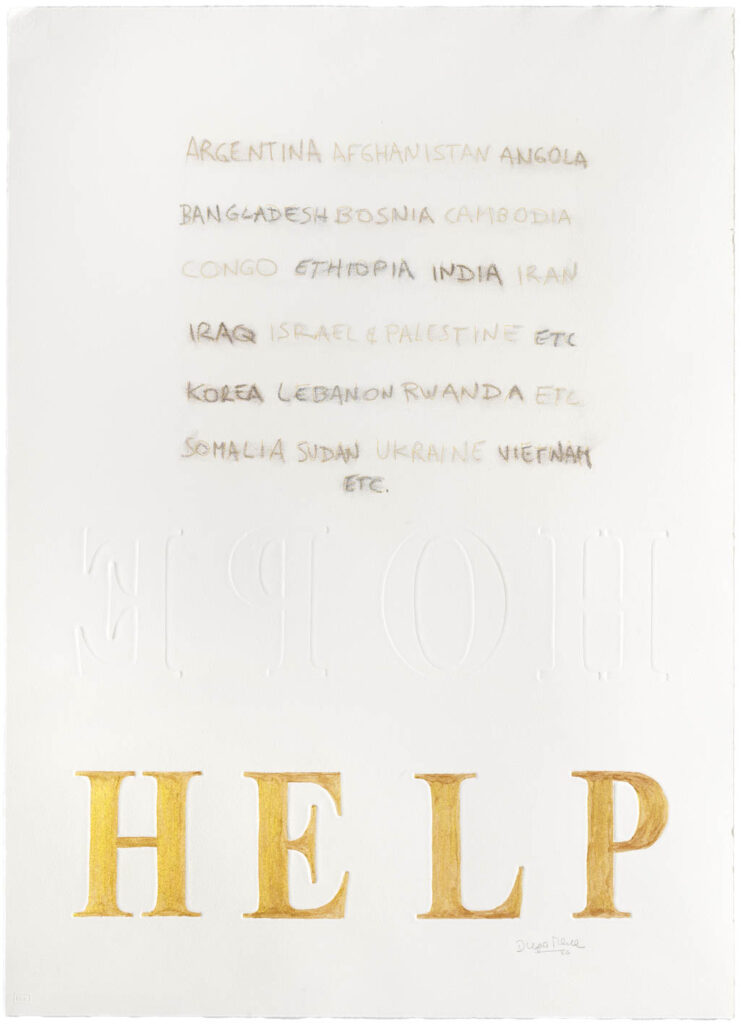
HELP, 2026
Embossing with handwork in acrylic and charcoal
102.7 x 74.5 cm
R 9500.00 VAT Incl. Unframed
Echoing ‘Hope’, this embossed print features the names of innocent children killed during global conflicts. It juxtaposes the promise of human rights against a list of countries marked by armed conflict.
Diego Masera is a conceptual artist based in South Africa whose work across painting, sculpture, and installation is shaped by displacement, memory, and the enduring search for home. Forced into exile as a child during Argentina’s military dictatorship, he grew up in Mexico, where his early encounter with color, form, and cultural plurality first opened a path toward art. That experience of loss, movement, and adaptation left a lasting imprint on his practice, which continues to reflect on belonging, fragility, inequality, and human resilience. Masera later studied in Italy before moving to Kenya, where an intended period of volunteer work became a decade of life and engagement in Africa. Over the years, he developed a parallel career in sustainable industrial development, working across Africa, Latin America, Asia, and Europe on questions of material production, livelihoods, climate, and social transformation. He completed a PhD at the Royal College of Art in London, bringing critical reflection to the relationship between development, culture, and lived experience. Today, fully committed to his artistic practice, Masera brings together a life lived across continents, disciplines, and histories. His work is informed by migration, social memory, and the tension between beauty and injustice, intimacy and structure, object and story. Through image, material, and space, he seeks to create works that speak quietly but insistently about dignity, coexistence, and the human need to imagine forms of home in a fractured world.
In 2026, Masera and David Krut had a chance meeting where they found themselves discussing the artist’s practice and his installation, Home – ikhaya, NIROX sculpture park. This encounter resulted in David extending and invitiation towards Masera to come into the workshop and explore printmaking. In March of that year, Masera began his collaboration with Roxy Kaczmarek, working on a body of monotypes and other works of paper.